
The Challenge
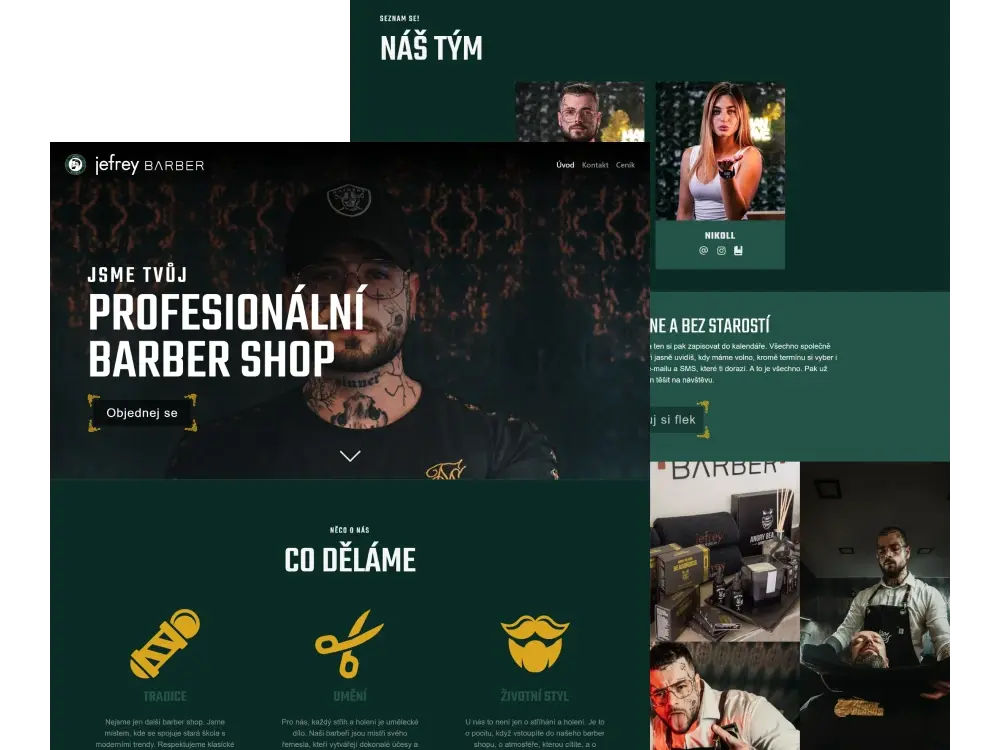
Jefrey Barber, a personal care brand based in the Czech Republic, had a high-performing website built on Jekyll. While the site was fast, it had a major operational bottleneck: content updates required a developer.
As a brand in the fast-moving personal care industry, the team needed to update product details, publish blog tips, and tweak landing page copy frequently. The existing workflow—editing raw Markdown files and triggering Git commits—was too technical and slow for their marketing team. They needed the performance of a static site but the ease of use of a visual website builder.
The Process
We executed a strategic migration to Next.js, preserving the site's speed while introducing a modern content editing workflow.
Migration: Jekyll to Next.js
We ported the existing codebase from Jekyll (Ruby-based) to Next.js (React-based). This transition allowed us to move from rigid Liquid templates to a component-based architecture.
- Preserving SEO: We carefully mapped all existing URLs to ensure no link equity was lost during the migration.
- Modern Styling: We refactored the CSS into Tailwind CSS, making the design system more maintainable and responsive.
Empowering the Client with Tina CMS
The core of this transformation was the integration of Tina CMS. Unlike traditional headless CMSs that detach content from the code, Tina allows for Contextual Editing.
- Visual Editing: The client can now edit text, swap images, and rearrange page blocks directly on the screen, seeing changes in real-time before publishing.
- Git-Backed Content: Despite the visual interface, all content is still saved as Markdown/JSON in the Git repository, maintaining the security and version control benefits of the JAMstack.
High-Conversion Landing Page
With the new React infrastructure, we built a dynamic landing page designed for conversion. We utilized Next.js App Router to serve optimized images and interactive elements that showcase personal care products vividly without slowing down the page.
The Outcome
The migration successfully bridged the gap between developer performance and marketer autonomy.
- 100% Client Autonomy – The marketing team now manages the entire site via Tina CMS without writing a single line of code.
- Improved Iteration Speed – Landing page experiments and content updates happen in minutes, not days.
- Future-Proof Architecture – Moving to Next.js opens the door for future e-commerce integrations (like Shopify or Stripe) which were difficult to implement in Jekyll.